Saturday, 25 February 2017

Picture Update

With so little time left on Bird Island a lot of my time is now spent packing and finalizing paperwork! That being said, there is still loads of fieldwork to keep on top of and myself, James and Lucy are still out all the time, with the new ZFA team leading the work, to enjoy our last moments with these incredible animals! So here are a bunch of photos to show what the animals have been up to recently:
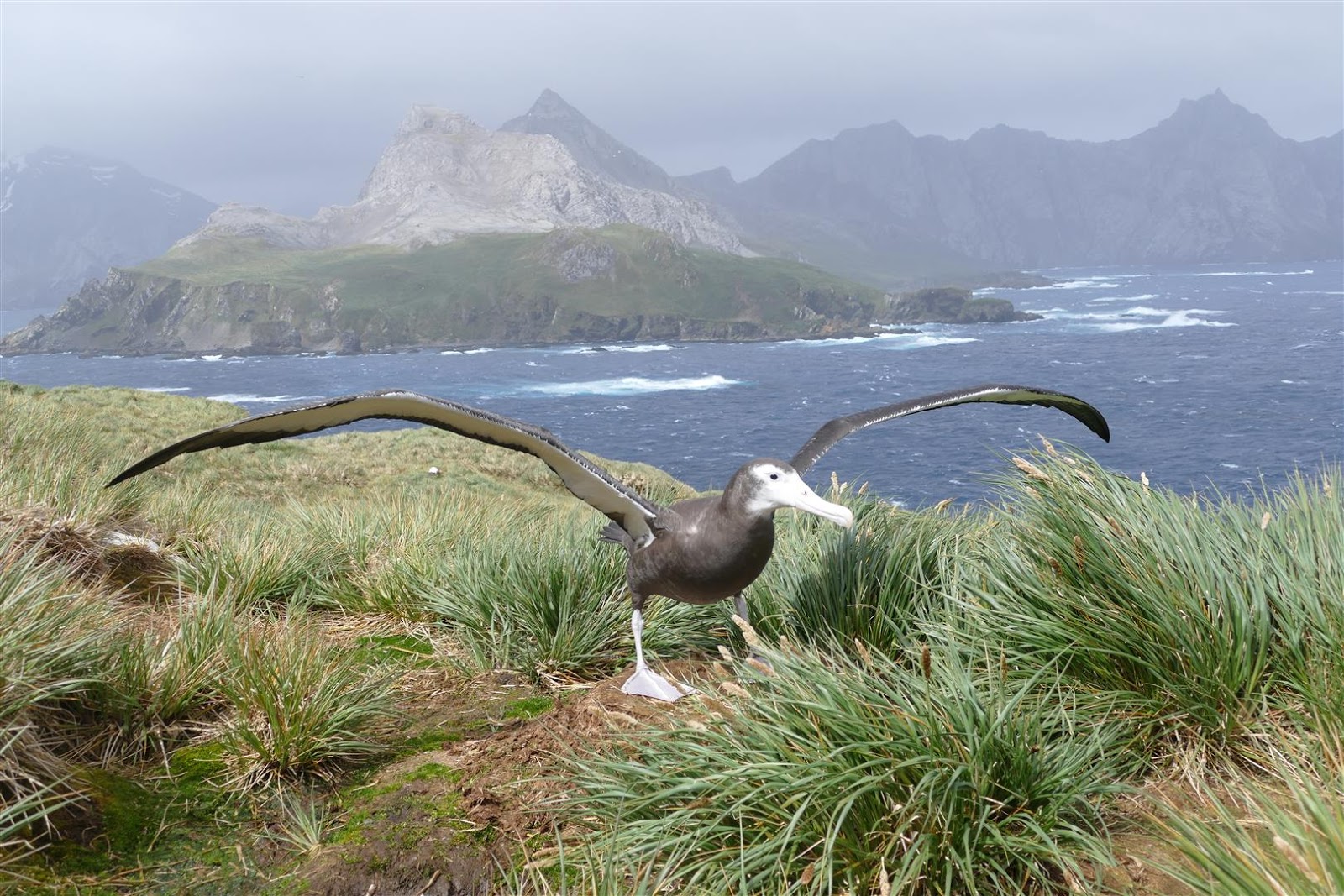
The final wanal chicks are making their first flight...
...once they get sure enough on their wing strength that is!
The grey-head chicks are growing up nicely, all on their own in the colonies now...
...whilst nearby to the grey-heads Antarctic prions are brooding small chicks...
...and chicks don't get much smaller than this Wilson's storm-petrel fluffball!
The shag chicks are now fledging...
...but the southern giant petrels are yet to develop their feathers; this very white chick will be a spirit geep!
Skuas are always on the lookout for some carrion...
...and the brains of a dead seal pup go down very well!
The gentoo chicks are now fully grown...
...and very curious of the world around them...
...they are starting to get their feet wet and go for their first swim...
...but that doesn't stop them getting some final meals from mum and dad!
Adult gentoos are now starting to moult as well...
...with a visiting elephant seal making its way through their colony!
The fur seal pups are now on their own most of the time...
...but they seem to enjoy life (even the ones we gave a blonde hair-do!)...
...watching over their kingdom...
...and keeping an eye on us all at base!
With just 2 weeks left to go on this magical island it is time to start saying goodbye and visiting areas for the final time.... plenty more photos to come!

Wednesday, 1 February 2017

Gentoos!

As mentioned in the last blog and recorded last year the gentoos had a complete crash last season meaning that I unfortunately missed out on studying one of my main species! These crashes have happened before but these tough little penguins still come back the following year and try again, usually faring better. Luckily this was the case this season and we have had gentoos chicks to work with!
Even when this small the chicks were bigger than I had been able to see last year!
Having missed out on them last season seeing them all run around this year makes it all seem like I am on the island for new again and it was all very exciting.
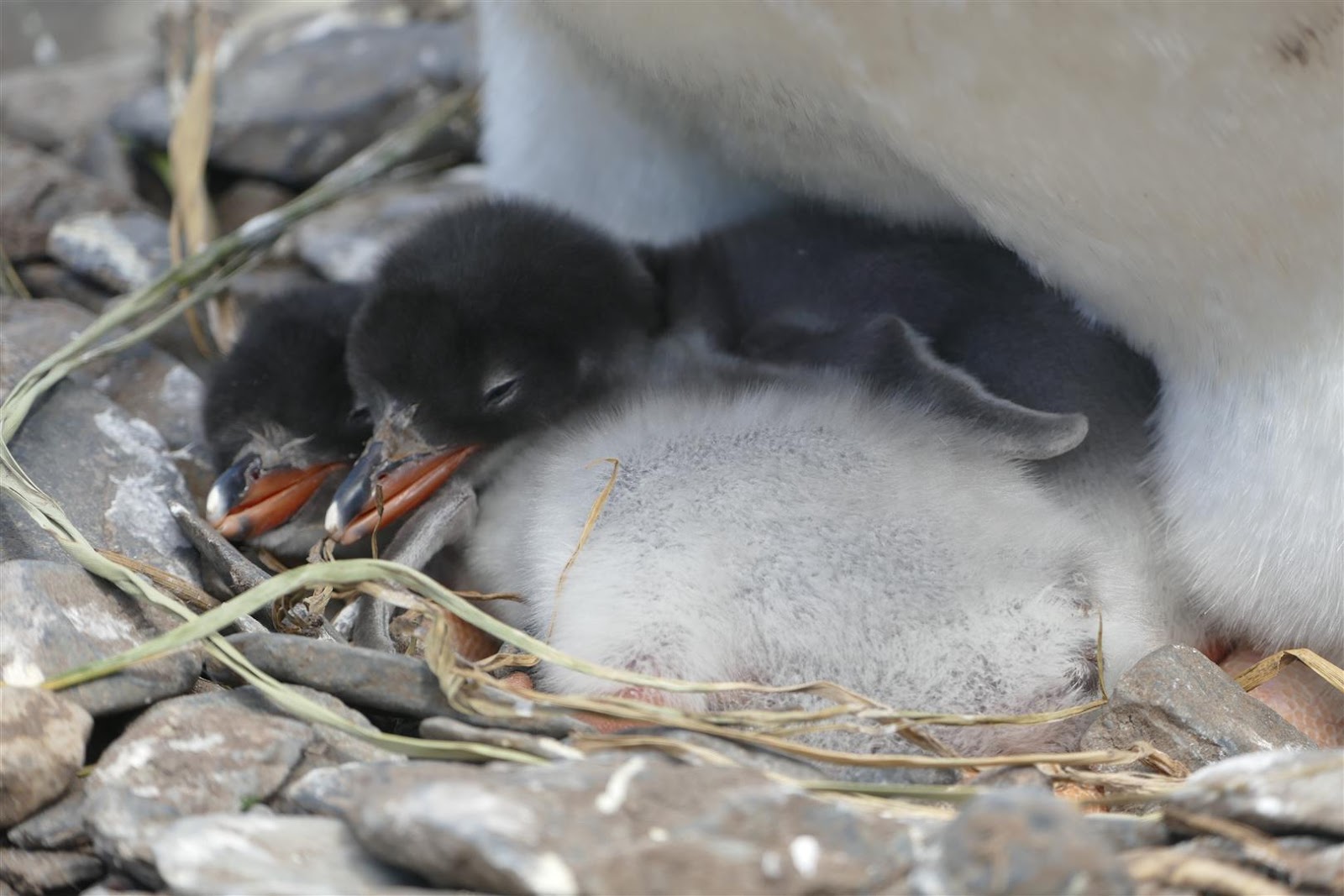
Snuggling up in the nest
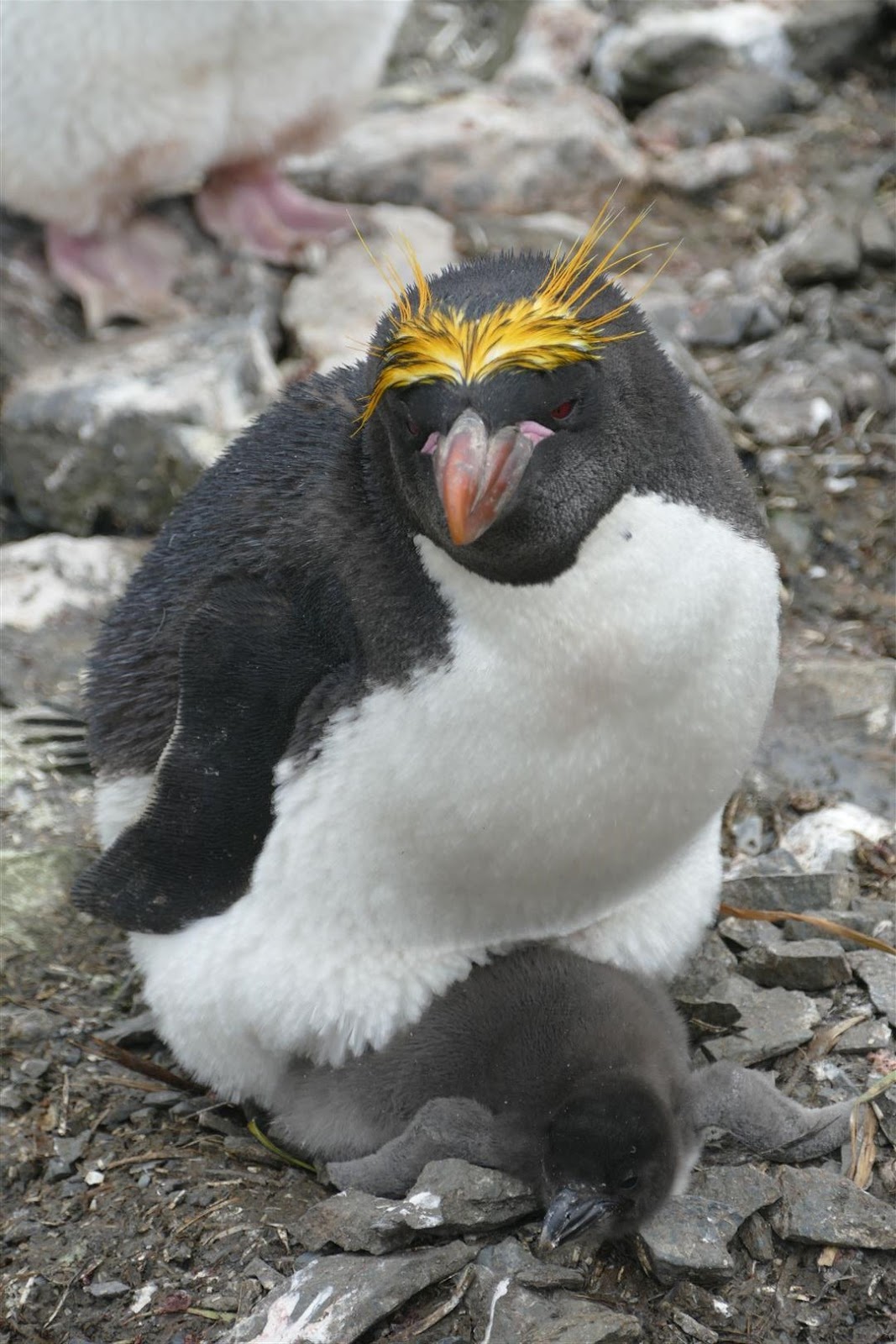
Unlike macs, who lay 2 eggs but will only hatch 1 chick the vast majority of the time, the gentoos usually have two chicks hatch and seeing them being brooded by the adults as they gradually get bigger is a great sight.
Getting too big for brooding but not big enough to be left alone
So cute!
Happy family
Once the chicks get too big to be brooded they begin to venture about the colony, huddling together for warmth and safety from predators they begin to redefine the word cute!
Beginning to venture out, but still being watched over
Huddling together for warmth, safety and cuteness!
They may be without an adult but siblings stick together still, especially when one is too scared to see the world and hides under its flipper!
As they grow the chicks become quite boisterous, it is particularly funny watching them when the adults come ashore as the chicks won’t just stay still and beg for a feed like most other species, they will in fact chase after the adults, often doing a complete lap around the colony, before the adult gives in and feeds the chick. This is a method to help ensure they are feeding the right chick as others that aren’t their own will give up sooner, but mainly it is just a hilarious sight!
"Leave me alone!"....
...."but I want food!"....
...."come back, feed me!"
"Sooooooooo full!"
As we have had gentoo chicks this year I was able to actually study them as well, there were two surveys of chicks done in January, a count and some weights.
Counting in the nest is ok...
...but counting when they move out and run around is much harder!
The first survey was the count, there are 7 colonies across the island and we had to ascertain how many chicks had survived in each, having already counted the nests earlier in the season knowing the number of chicks now, when they are near fledging, allows us to determine breeding success.
So many chicks ready to fledge, but just how many? That's what we were finding out :) (Photo courtesy of James)
Counting thousands of chicks a couple hundred at a time is not easy when they are constantly running around and moving! So the job requires quite a few people all gathered around a group within the colony and trying to count. When counts are of a mass of birds like this it is repeated many times to make sure the numbers are within an accurate range of each other before moving on to the next group.
Group together and count a few hundred in one go, not that easy! (Photo courtesy of John)
But counting so many gentoos is simply amazing and we all loved the experience! The weights follow the counts by a couple of days when a sample of the population is checked for how healthy they are before fledging, based on fledging weight.
A happy team after some good work (Photo courtesy of John)
Working with the gentoos ultimately had a moment of realisation for me though. Despite having the excitement of being able to work with them this year, when I couldn’t last year, I realised that the counts and weights were in fact the last work to be done with gentoos this season.
More huddles...
...more safety...
...more cutness!
This makes them my first study species that I have finished working with in my time on Bird Island and that comes with the knowledge that the next two months are going to be filled with lasts and goodbyes. It is going to be quite an emotional farewell, this island and its species are so special, and 18 months is a long time to be studying here, that knowing the end is close comes with some very hard moments!
Now the chicks are moulting and will be ready to fledge very soon
But with so much still to do in the final two months and so many amazing things to still see that we are definitely going to be making the most of every last opportunity!
Everybody does it!
Playing with stones and already practising nest building!
A seal comes for a view of the colony as well

Sunday, 29 January 2017

White-chins and chicks

November and December are always exciting times on Bird Island as many of our study species being to hatch. In mid-November the northern geeps began hatching, followed shortly by the gentoos.
A northern geep chick just pipping out of its egg!
Geep chick being brooded
Gentoo chicks
By the end of the month we were seeing ducklings running around, although pintail breeding times can be so variable we were also lucky enough to find a nest of eggs in December – a very rare sighting!
A pintail nest, only the second I have seen and the hardest nest to find on BI!
Then in December the skuas were hatching closely followed by the macs and mollies in the middle of the month. The final species to hatch at this time were the southern geeps at the end of the month.
Skua chick
Mac chick
It is great to see all the life around the island and whilst some species are faring better than others at this stage at least there are no breeding crashes like there was for the gentoos last season! Of course it is not just the birds that are progressing, the seal pups are growing up well and enjoying being left alone around the beaches by their mums who are going out to feed.

A puppy trying to investigate inside a log!
"Who are you? Intruding on our puppy party!"
They are very curious at this stage, and tough little guys!
Not all species are at the young stage though, the wanderers take so long to raise a chick that they don’t actually lay their eggs until mid-December and won’t hatch until March. Alongside this whilst most chicks have fledged there are still a few stranglers left by the end of the month and these won’t take their first flight until January, by which time all of this years’ eggs will have been laid! (This is why wanals only breed once every 2 years, they don’t have the time/energy to lay an egg and raise a chick so close after their previous chick has fledged.)

A wanal not yet quite ready to fledge
'Superhero wanal' - so called because of the mask look on the face - practicing to fly
But amongst all this excitement and regular studying of all these species this December marked a very special survey for us. Last year we had the all island giant petrel census, but this year we had the all island white-chinned petrel census!

White-chins are burrow nesting seabirds and are about the size of a magpie but shaped like an albatross! This breeding habit makes them more difficult to survey than giant petrels who could simply be counted every time one was seen. In fact counting a few thousand giant petrels above ground is much simpler than counting a few magnitudes more of underground white-chins! So a different method is required.
White-chins are hard to get photos of, so having to re-use a couple from a blog last year...
Instead of trying to count all burrows, a near impossible task that would take months, we instead set up quadrats in areas that represent the surrounding habitat and terrain and counted the number of burrows within the quadrat alone; therefore we don't actually have to count all burrows on the island, so long as we are representative of the island as a whole the numbers can be extrapolated. Each burrow is checked for occupancy in order to determine the ratio of active to inactive burrows.
...but when the photos are this good I can't help it!
Whilst using this quadrat method makes the survey feasible it is still a long-haul survey. We conducted 495 individual quadrats, representing the habitats across the entire island, across 12 days of work (15th-24th, 27th and 31st December). Usually a quadrat would take 4 people to survey, two taking measurements of the habitat (tussock height, seal presence, incline, orientation, tussock cover) with the other two counting and assessing burrows. Repeating this process 495 times takes a lot of effort but it was a lot of fun – except when sticking our heads in the tussock during hayfever season makes us suffer through some of it!
Measuring the habitat (Photo courtesy of Carrie)
This census was one of the biggest I have ever conducted and it went incredibly well, white-chins are potentially becoming my favourite species, their call is something I will always remember, particularly as it is the sound I go to sleep with – they are nesting in the tussock behind base as well – and they have a very striking look despite being almost all black. They can be quite curious birds and I am very happy to have worked so much with a species that is not usually studied this way (all island census’ for any species only occur every 5 or 10 years depending on the species, except wanals which are an annual survey).
A white-chin lands mid-survey...
...and just hangs around to see what we are doing! :)

Thursday, 19 January 2017

Milestones and Madness

Despite November having a lot going on for wildlife there have been a few milestones as well. Beginning with the 23rd November; this was a very special day as it marked a full year since I arrived on Bird Island!
One year ago: I am still just as (if not more) excited to be here!
It has been an amazing year, tough at times, but spectacular. The wildlife never ceases to amaze me and whilst I have only spent time with a grand total of 15 other people in the past 12 months I have made some brilliant friends. It is always difficult to spend so much time away from home, but when your job is researching the ecology of penguins, petrels, albatross and seals there are worse ways to spend a year!
Wilson's storm-petrels nesting in a rat box! BI is rat free and these NON-poison boxes allow us to check it continues to be so. But if a couple of stormies move in to one of them all the better :)
The following day from my 1 year anniversary on BI marked the 58th anniversary of science on Bird Island itself. The 24th November 1958 is the date when the first scientific research crew landed on BI, set up some basic huts and started researching the wildlife. A lot has changed since those early days – thankfully the base is bigger and the clothes a lot warmer! – but the key goals of science on BI remains the same, to understand and protect wildlife and habitats in an ever changing world.
58 years of Bird Island science!
Of course it can’t all be science and research, over a year on an island means a bit of madness is bound to set in! Luckily though the fur seal pups have started to be born, this means the return of the blonding! About a year ago I was introduced to the tradition that when the first pups are born we all dye our hair blonde in camaraderie with the seal pups, who get a blonde marking of their own once counted.
The beach in front of base is getting more seals by the day
Puppies soon learn how to relax!
But this year, instead of just some crazy colours, I have decided to become my study species!
I've not gone crazy........ honest!
After a couple of milestones and going even more crazy we had another major event on the island. First Call occurred over the 1st and 2nd December, which means we are now fully stocked with equipment and food for my final months on the island (and more importantly for the new winterers to survive the cold months!).
The RRS Ernest Shackleton sits just offshore, sending our cargo in by tender
Throughout December there will be plenty of work to be doing and it certainly won't slow down any in the new year. But now that first call has come and gone it is time to enjoy what time remains for me down south before last call in March!